Safety in Commercial Diving: How to Choose the Right Diving Contractor
Safety sits at the heart of every successful diving operation. However, for clients, knowing whether a diving contractor genuinely operates to the highest safety standards can be challenging. Accreditations and certifications are important but they rarely tell the full story.
To make an informed decision, you need to look beyond the surface and assess the contractor’s overall approach to safety, equipment, and personnel.
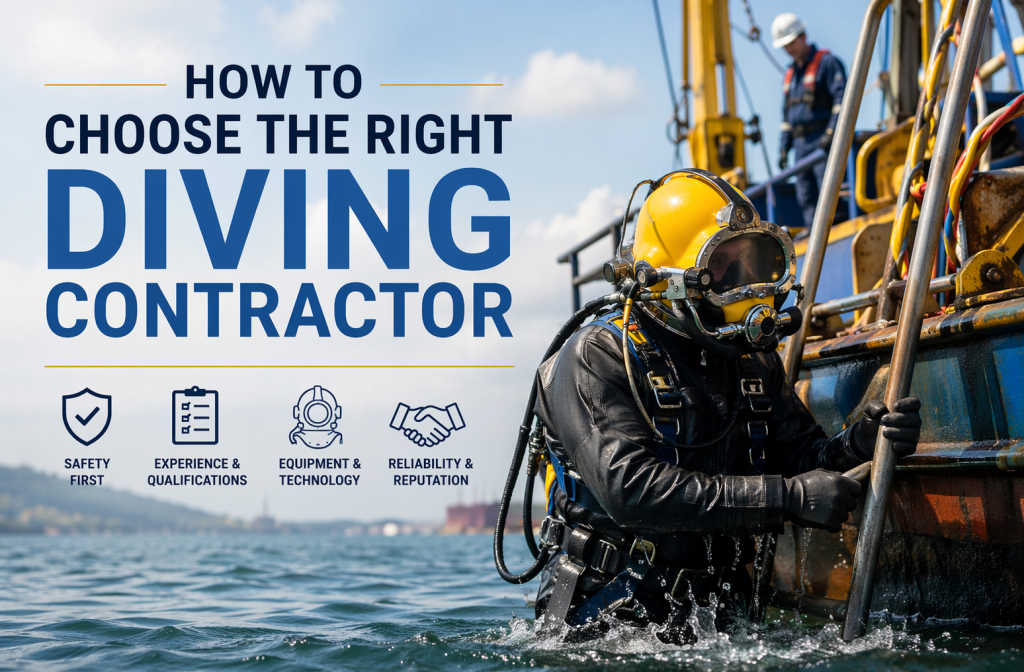
Do Certifications Guarantee A Safe Diving Contractor?
Many diving contractors hold ISO certifications such as ISO 9001 (Quality), ISO 14001 (Environmental), and ISO 45001 (Health & Safety). These demonstrate that a company operates within a recognised management framework.
However, these systems rely on sample-based audits. While they confirm that processes exist, they do not inspect every project, every diver, or every piece of equipment. As a result, certification alone cannot guarantee safe operations. Therefore, it is best practice to view certifications as one part of a broader safety assessment.
Equipment Safety: The Foundation of Diving Operations
Commercial diving relies on specialised, life-supporting equipment. Therefore, proper maintenance and testing are critical.
Under the Diving at Work Regulations 1997, diving contractors must ensure that all operations are:
- Properly planned
- Effectively managed
- Conducted in a way that protects the dive team
This includes ensuring that all equipment is:
- Suitable for the task
- Properly maintained
- Fit for purpose
While the regulations themselves are not highly prescriptive, the supporting HSE Approved Codes of Practice (ACOPs) provide clear direction. They require contractors to implement a planned preventative maintenance (PPM) system, supported by:
- Manufacturer servicing requirements
- Routine inspections and testing
- Accurate and up-to-date maintenance records
A structured and documented maintenance regime is not optional—it is essential for both compliance and safety.
Memberships and Industry Audits
Reputable diving contractors are often members of recognised trade associations such as:
These organisations audit member companies against industry-specific standards, focusing on:
- Safe working practices
- Operational procedures
- Equipment management
- Personnel competence
Although these audits are also sample-based, combining ISO accreditation with trade association membership significantly reduces risk. However, they still provide valuable assurance that the contractor has been independently reviewed against both general and industry-specific benchmarks.
The Human Factor: Competence and Experience
Even with the best equipment and procedures, safety ultimately depends on the people delivering the work.
All divers may hold the correct qualifications but qualifications alone do not guarantee competence.
Instead. Clients should consider:
- Are diver logbooks regularly reviewed?
- How current is their experience?
- How long have subcontractors worked in similar roles?
- Have they remained active in the industry?
A strong diving contractor will actively manage competency through:
- Ongoing assessment of personnel
- Regular logbook and CV reviews
- Structured team composition
Importantly, contractors should balance experience across the team. While introducing new divers is essential for industry growth, projects should remain experience-led, with junior personnel supported by seasoned professionals.
What Clients Should Check Before Appointing a Diving Contractor
Selecting a safe and competent diving contractor does not need to be complicated. By reviewing a few key areas, you can quickly assess whether a company operates to a high standard.
1. Audited Management Systems
Confirm whether the contractor holds UKAS-accredited ISO certifications (or equivalent). This indicates that their processes follow recognised standards and are subject to ongoing improvement.
2. Trade Association Membership
Check for membership with organisations such as IMCA or ADC. This reduces your due diligence burden, as the contractor has already been assessed against industry-specific requirements.
3. Training and Competency Policies
Review how the contractor manages personnel competence. Look for:
- Clear competency frameworks
- Regular performance reviews
- A sensible ratio of experienced to less experienced divers
A well-structured team is essential for both safety and productivity.
4. HSEQ Policy
A professional contractor should have a clear, concise, and company-specific HSEQ (Health, Safety, Environment, and Quality) policy.
Avoid generic or copied documents. Instead, look for policies that reflect real operations and demonstrate genuine commitment.
5. RAMS and Project Planning
Detailed Risk Assessments and Method Statements (RAMS) are critical. These documents should be project-specific and cover all operational risks.
A robust diving project plan should include:
Core Project Information
- Site and project-specific details
- Roles and responsibilities
- Communication protocols
- Equipment and maintenance considerations
Emergency Planning
- Nearest decompression chamber and hospital
- Emergency response procedures
- Recovery drills
- Emergency contact lists
- Medical equipment and trained personnel
Operational Controls
- Weather limitations
- Working hours and shift patterns
- Diving depths and decompression planning
- Required permits and isolations
Environmental Considerations
- Environmental impact and mitigation measures
Methodology and Procedures
- Detailed work methodology
- Management of Change (MOC)
- SIMOPS (Simultaneous Operations) planning
A high-quality RAMS document should be clear, detailed, and tailored—not generic.
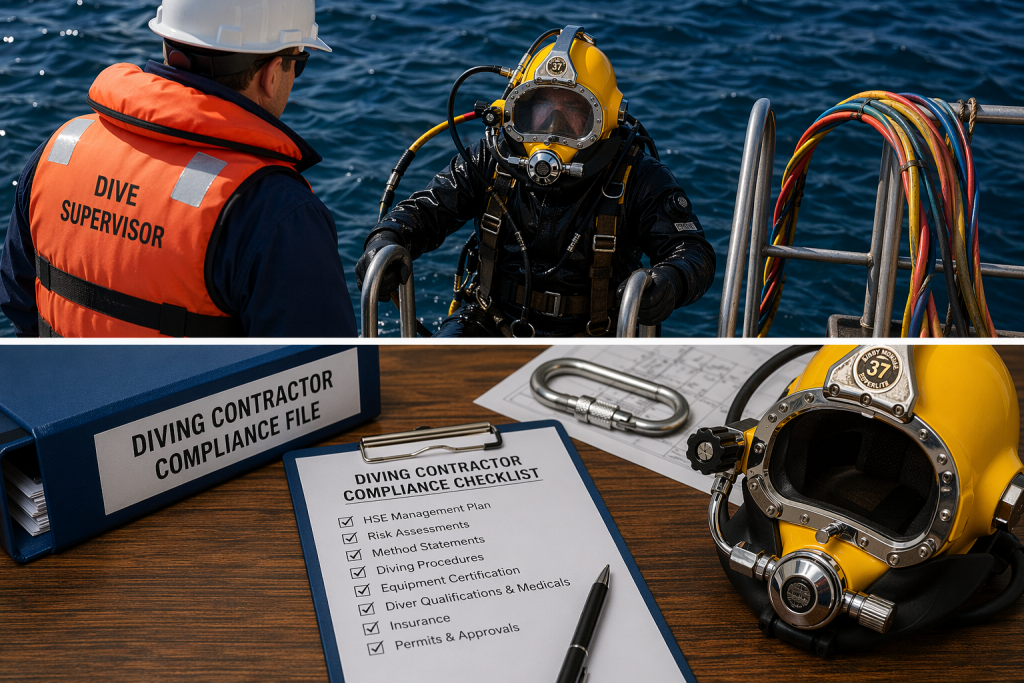
Final Thoughts: Taking a Holistic View of Safety
Safety in commercial diving goes far beyond certifications and paperwork. While ISO standards and trade memberships are valuable indicators, they must be underpinned by:
- Well-maintained equipment
- Competent and experienced personnel
- Robust planning and documentation
- A genuine, company-wide safety culture
By taking a holistic approach, clients can confidently select a diving contractor that not only meets compliance requirements but consistently delivers safe, reliable, and high-quality operations.
Need Assurance on Your Next Diving Project?
At Diveworks International Limited, we combine industry-leading standards with practical offshore experience to deliver safe and efficient diving solutions across the UK and internationally. 👉 Diving Safety
If you would like to discuss your project or review our safety systems, get in touch with our team today. 👉 Click Here