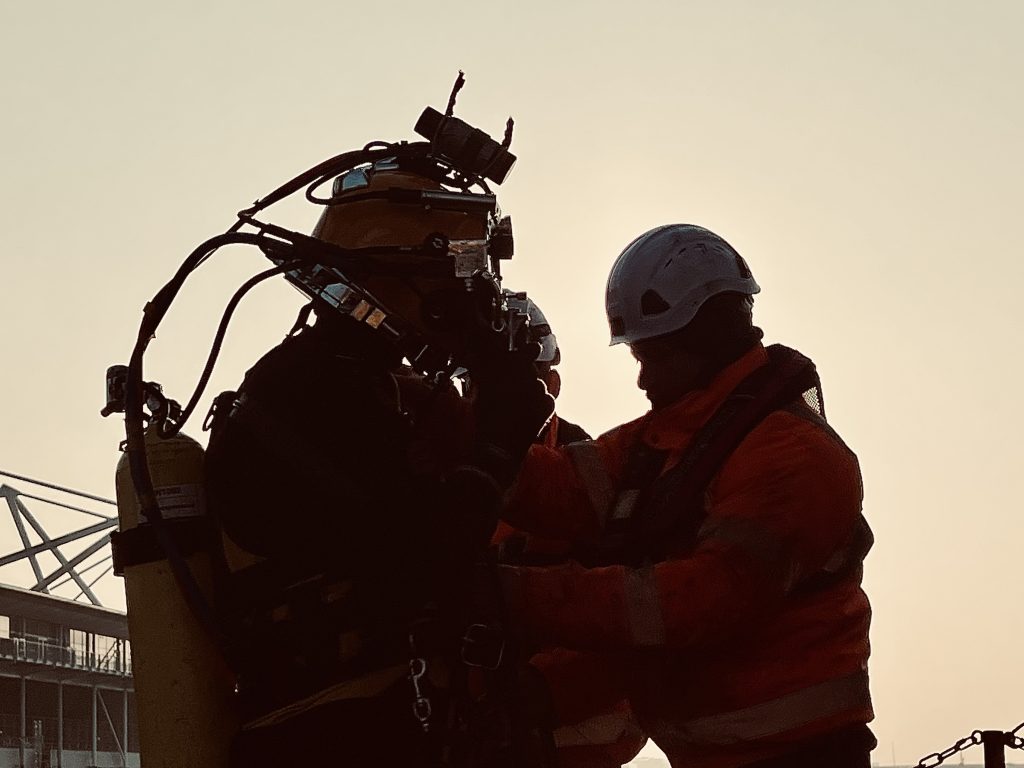
Diver-Led UXO Target Investigation
The Smarter Approach for Shallow‑Water Projects
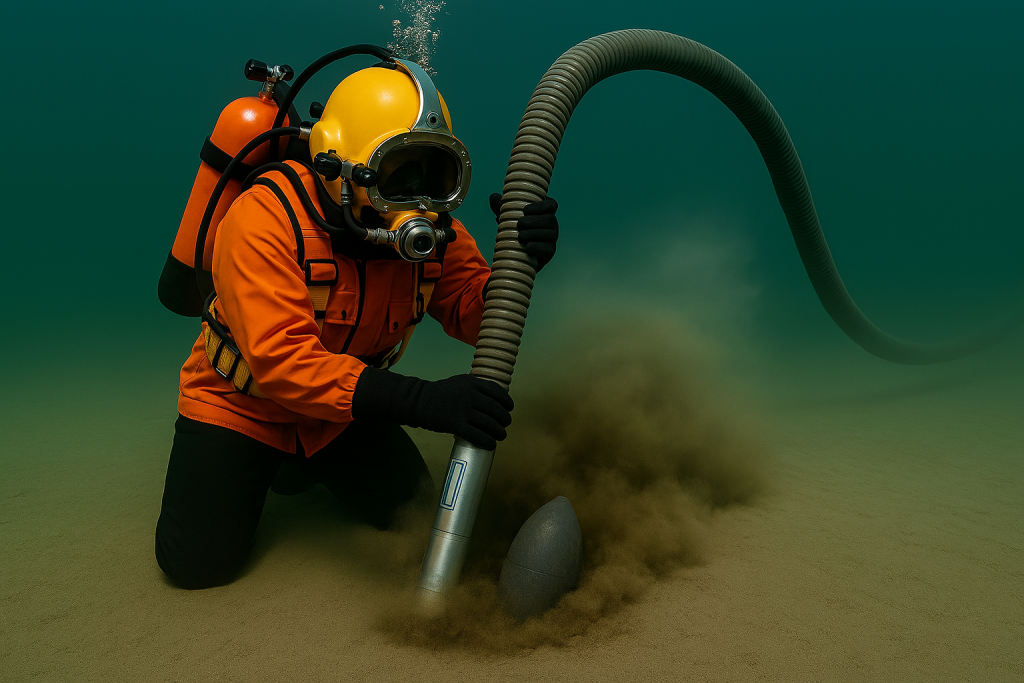
Unexploded Ordnance (UXO) continues to present a significant risk to offshore and nearshore developments. While remote survey technologies are essential, diver‑led UXO Target Investigation (TI) offers a highly effective, precise, and confidence‑driven solution particularly in shallow or constrained environments.
Drawing from Diveworks International’s UXO Symposium presentation, this article explores how diver‑led investigation enhances safety, reduces uncertainty, and delivers real‑world project assurance.
Why Use Divers for UXO Target Investigation?
Diver-Led UXO Target Investigation bring a level of clarity that remote methods alone cannot always achieve. By placing trained specialists directly on the seabed, projects benefit from hands‑on assessment and immediate decision‑making.
Key Advantages
- Effective in shallow‑water and nearshore environments
- Reduces magnetic masking, improving target clarity
- Enables physical measurement of potential UXO (pUXO)
- Allows selective excavation where required
- Helps eliminate false positives
- Delivers greater overall project assurance
Compared to purely remote investigation, diver‑led UXO TI significantly increases confidence in target identification, supporting safer construction and reducing costly delays.
The Right Team for the Job
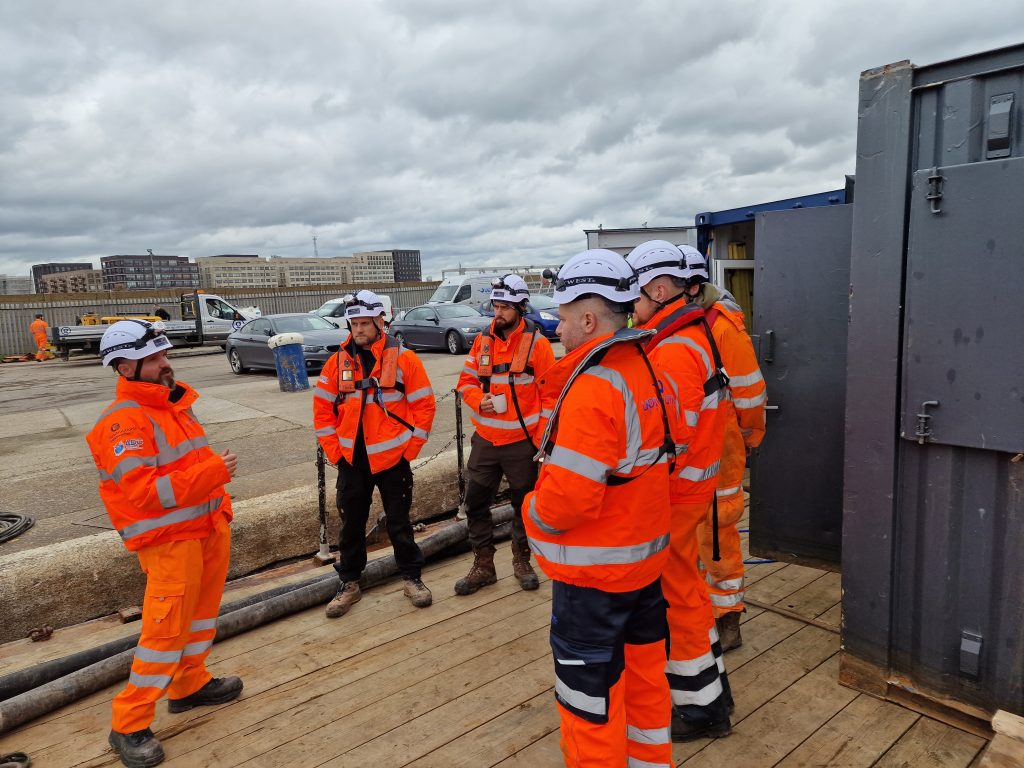
Successful UXO target investigation relies on coordination between specialist personnel. A typical diver‑led UXO TI operation includes:
- Vessel and marine crew
- Client representative or project manager
- Surveyor
- Diving supervisor
- UXO supervisor
- Civil construction divers
- UXO‑qualified divers
Each role is critical, ensuring operations are conducted safely, efficiently, and in line with regulatory and client requirements.
Specialist Equipment & Resources
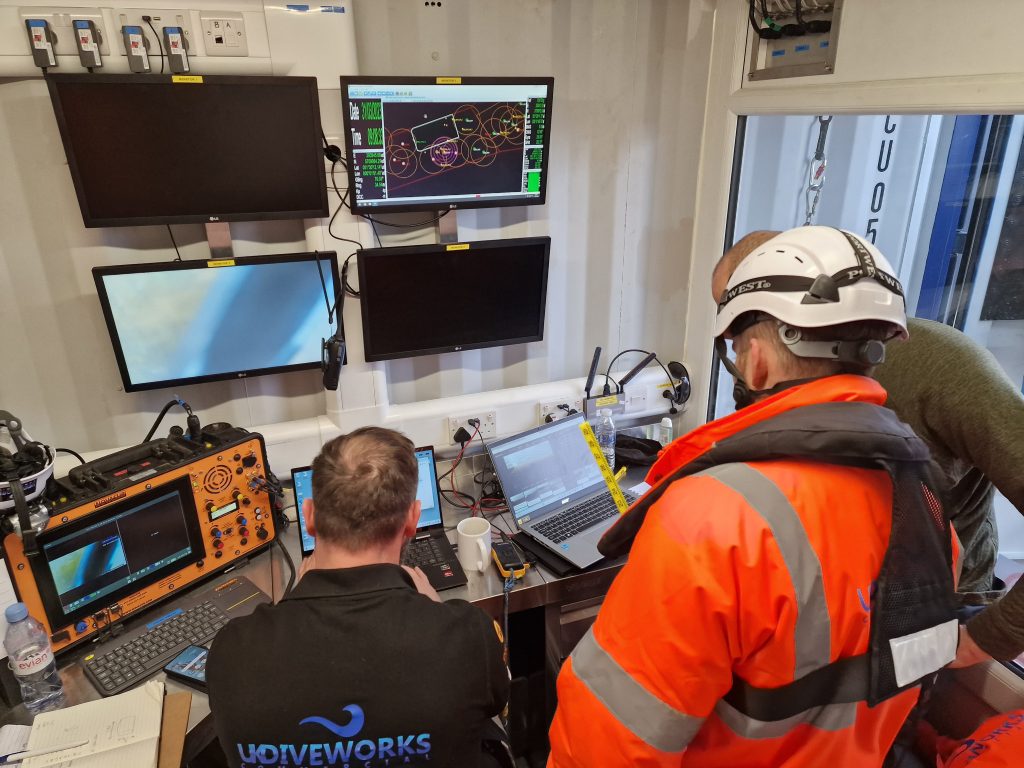
Diver-Led UXO Target Investigation require a robust and well‑planned resource spread, including:
- Appropriately classed vessel and anchoring system
- Positioning and tracking systems (USBL & beacons)
- Full commercial dive spread and decompression chamber
- Hand‑held magnetometers for precision detection
- Excavation systems suitable for seabed conditions
- Dedicated search‑scheme equipment
This integrated setup allows teams to transition seamlessly from detection to identification without remobilisation.
Step‑by‑Step: How Diver‑Led UXO TI Works
A standard diver‑led UXO target investigation follows a structured, repeatable methodology:
- Vessel positioning outside the high risk zone adjacent to the target.
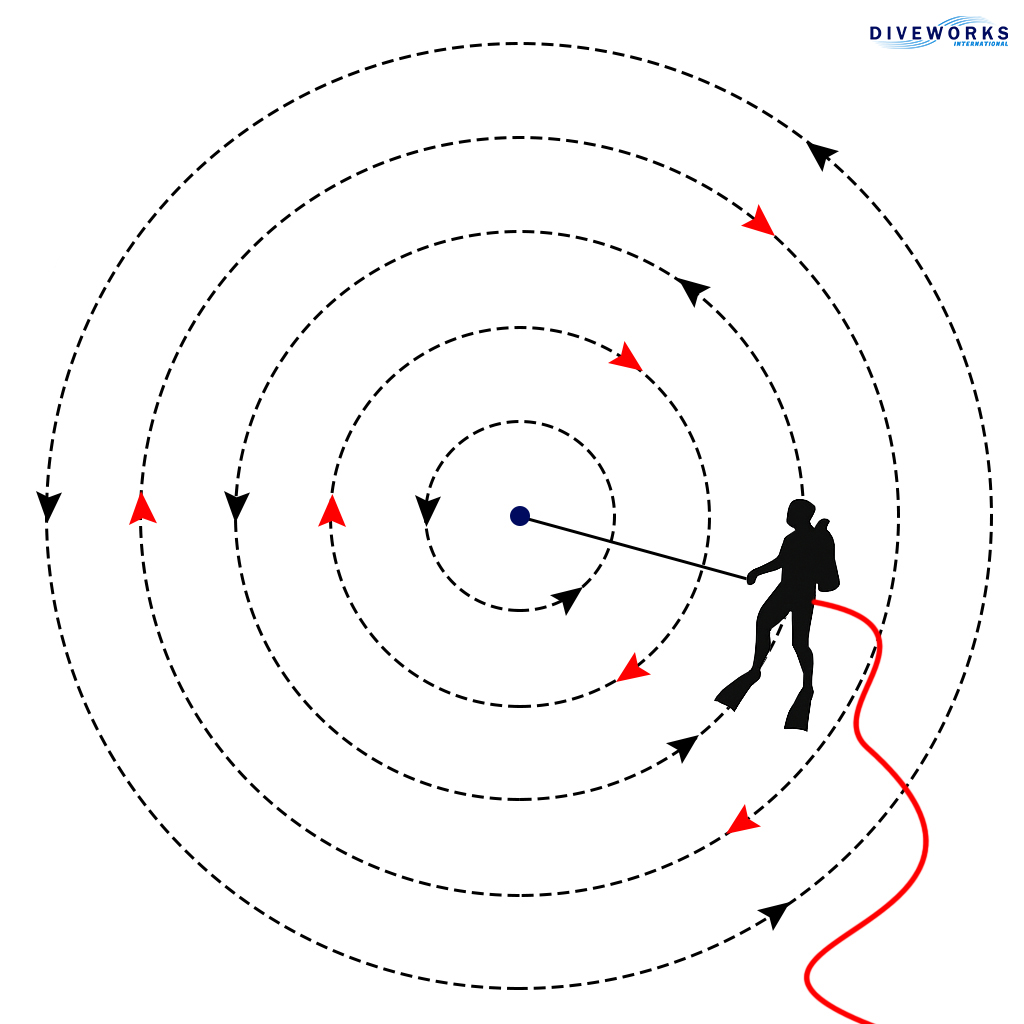
- Deployment of a defined search scheme
- Circular diver search using a magnetometer
- Target‑adjacent excavation, if required
- Physical location of the pUXO
- Identification and confirmation of the object
- Target Investigation Report completed
- Relocation to the next target
This workflow ensures consistency across multiple targets while allowing flexibility for site‑specific conditions.
Reducing Risk, Increasing Certainty
One of the biggest challenges in UXO mitigation is distinguishing genuine threats from benign anomalies. Diver‑led investigation dramatically reduces uncertainty, cutting down false positives and enabling informed decision‑making earlier in the project lifecycle.
By confirming targets in situ, project teams can:
- Avoid unnecessary UXO disposal activities
- Protect personnel and assets
- Maintain programme certainty
- Demonstrate due diligence to regulators and stakeholders
A Proven Solution for Modern Marine Projects
Diver‑led UXO Target Investigation remains a trusted and highly effective method for managing UXO risk in shallow water and restricted environments. When combined with robust planning, skilled personnel, and specialist equipment, it provides unmatched confidence that survey targets are fully understood and appropriately managed.
For developers, contractors, and authorities alike, the message is clear: when assurance matters, divers make the difference