Confined Space Work: Risks, Mitigation, and How to Choose the Right Contractor
Introduction
Confined space work presents some of the most hazardous conditions in the construction, marine, and industrial sectors. From storage tanks and culverts to shafts and sealed chambers, these environments can quickly become life-threatening without proper planning and control.
Therefore, understanding the risks associated with confined space work, as well as how competent contractors mitigate those risks, is critical for any client commissioning such activities.
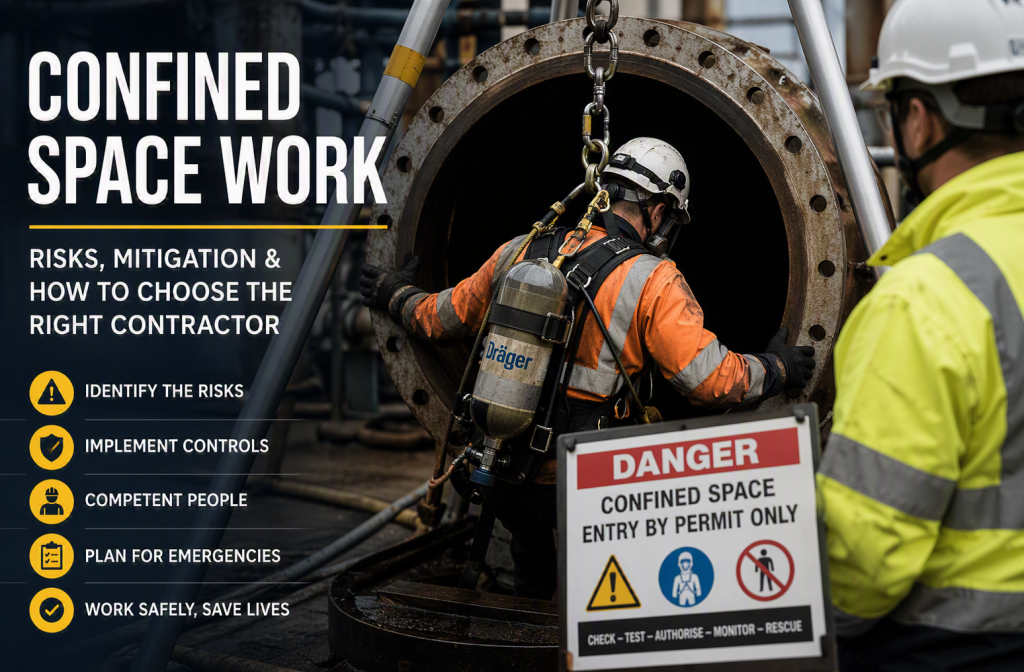
What Is a Confined Space?
A confined space is any enclosed or partially enclosed area where there is a reasonably foreseeable risk of serious injury or death due to hazardous conditions.
Typical examples include:
- Manholes and chambers
- Storage tanks and vessels
- Sewers and culverts
- Pits, silos, and enclosed voids
Importantly, it is not the size that defines the risk, it is the conditions within the space.
Key Risks Associated with Confined Space Work
Confined spaces are dangerous because hazards are often invisible, rapidly changing, and difficult to escape from. [thehsecoach.com]
- Oxygen Deficiency
Low oxygen levels can result in unconsciousness within seconds and are one of the leading causes of fatalities. - Toxic Gases and Vapours
Gases such as hydrogen sulphide or carbon monoxide can accumulate due to poor ventilation, posing serious inhalation risks. - Fire and Explosion
Flammable atmospheres can ignite from sparks, hot works, or mechanical equipment. - Engulfment and Flooding
Liquids, sludge, or free-flowing materials can enter the space, leading to drowning or entrapment. - Restricted Access and Rescue Challenges
Limited entry and exit points significantly delay rescue operations, often worsening incidents. - Physical and Environmental Hazards
These include:- Extreme temperatures
Slips, trips, and falls
Mechanical or electrical hazards
- Extreme temperatures
How Confined Space Risks Are Mitigated
A competent contractor will never rely on a single control measure. Instead, they implement a layered safety system aligned with UK regulations.
- Avoidance of Entry (First Principle)
Where possible, work should be completed without entry using:- Remote tooling
- CCTV inspection
- Jetting or cleaning systems
- Detailed Risk Assessment and RAMS
- A “suitable and sufficient” risk assessment must identify hazards and define controls before work begins.
- Permit-to-Work System
- A confined space permit ensures:
- Controlled access
- Defined roles and responsibilities
- Authorised entry only
- Atmospheric Testing and Monitoring
- Gas testing is essential before and during entry to confirm safe oxygen levels and detect hazardous gases.
- Ventilation Systems
Mechanical or natural ventilation is used to:- Remove toxic gases
- Maintain safe oxygen levels
- Prevent gas build-up
- Competent Personnel and Training
Only trained and experienced personnel should enter confined spaces, with clear roles such as:- Entry Supervisor
- Standby/Top Man
- Authorised Entrants
- Emergency and Rescue Planning
Crucially, rescue plans must be in place before entry begins. Emergency services cannot be relied upon as the primary rescue method.
Typical provisions include:- Rescue harness and retrieval systems
- Dedicated standby personnel
- First aid equipment and trained personnel
- Communication systems
- Immediate extraction capability
What Clients Must Check When Hiring a Confined Space Contractor
Selecting the right contractor is critical. The cheapest option is rarely the safest or most compliant.
- Proven Competence and Experience
Verify:- Relevant confined space training certifications
- Demonstrable project experience
- Understanding of site-specific hazards
- Comprehensive RAMS
Ensure the contractor provides:- Task-specific Risk Assessments
- Detailed Method Statements
- Emergency rescue plans
- Hazard identification
- Control measures
- Compliance with UK Regulations
The contractor must comply with:- Confined Spaces Regulations 1997
- Health and Safety at Work Act
- Management of Health and Safety Regulations
- Equipment and Technology
Check that the contractor can provide:- Calibrated gas detection equipment
- Ventilation systems
- Certified PPE and breathing apparatus
- Rescue and retrieval systems
- Permit-to-Work Systems
- The contractor should operate a robust permit system aligned with your site controls.
- Emergency Preparedness
Ask:- How will a casualty be recovered?
- How quickly can rescue be executed?
- Is there a dedicated rescue team on standby?
- Supervision and Communication
A competent contractor will provide:- Active supervision at all times
- Clear communication protocols
- Continuous monitoring of conditions

Why Choosing the Right Contractor Matters
Confined space incidents rarely give second chances. Many fatalities occur not during the initial incident but during unplanned rescue attempts by untrained personnel.
Therefore, selecting a contractor with the right expertise, equipment, and procedures is essential to:
- Protect life
- Ensure legal compliance
- Avoid project delays and liability
Conclusion
Confined space work is inherently high-risk; however, with the correct planning, competent personnel, and robust safety systems, these risks can be effectively controlled.
For clients, the responsibility does not stop at appointing a contractor. Instead, due diligence in contractor selection and oversight is critical to ensuring that all confined space operations are carried out safely and in full compliance with UK legislation.
For Confined Space Services 👉 CLICK HERE
Or CONTACT US for more information
👉 Follow DWI for all the latest News